
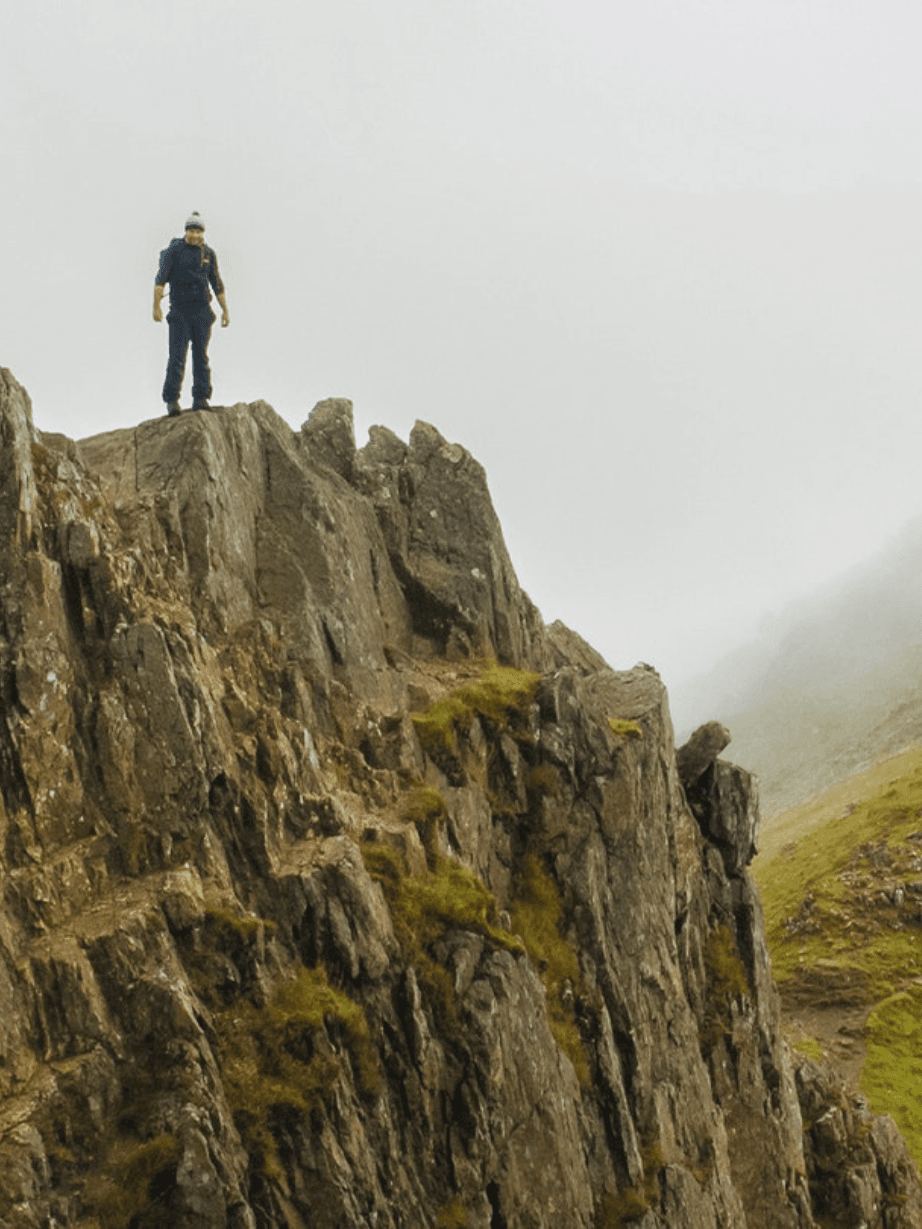

In this guide to scrambling for beginners we’ll go over the basics; what exactly is scrambling, what the grades mean, what equipment you’ll need, and where the best places are to give it a go.
Spend enough time walking in the British hills and sooner or later you'll want to try routes that involve scrambling. The word can be off-putting, conjuring up images of vertical rock and big drops. Some scrambles are like that, but many aren't, and avoiding them means missing some of the best mountain days in the country.
To start tackling some easy routes, all you need is a little bit of knowledge and a slow-and-steady approach. From there you’ll realise that practice is all you need to open up a whole new world of mountain routes.
What is Scrambling?
Put simply, scrambling is when your walking route becomes so steep and rocky that you need to use your hands to pull yourself up and give you extra stability.
Many walking routes in the UK will involve a small element of scrambling and you might be thinking to yourself that you’ve had to use your hands before without realising that you’re actually scrambling. Only when there are prolonged sections of a route that involves using your hands will it be graded as a proper scrambling route, but chances are you’ve already done some small sections without realising it.
What are the Scrambling Grades?
Scrambling routes in the UK range from grades 1 to 3, with 1 being the easiest. At the lower end of the spectrum, the route will just be a challenging walk, whereas the upper end will be more like rock climbing and ropes will be required.
Grade 1
A grade one scramble is likely to feature prolonged sections that are steep, rocky and exposed and both hands will be needed for balance and to pull you up large rocks. That said, not a huge amount of technical skills are needed and any experienced hiker with a good head for heights and a decent level of fitness should be able to tackle this grade with relative ease.
Grade 2
At grade two the line between scrambling and rock climbing begins to become blurry. These routes can be steep and exposed, requiring ropes for additional safety on some sections. Route finding can also become more difficult and a good level of skill and experience is needed.
Grade 3
A grade three scrambling route will often be marked in a guidebook as an easy climbing route, and that should give you a clear indication of what to expect. Routes will be very challenging and a good knowledge of working with ropes is needed. It goes without saying that this grade should only be attempted by those will the skills and confidence.

What Equipment is Needed for Scrambling?
The good news is that, for a beginner, no specialist equipment is needed beyond your usual hiking gear. A good pair of walking boots with plenty of support and grip is essential but other than that your normal walking gear is absolutely fine.
However, as your skills progress and you move onto grade two and three routes, some scrambling gear such as ropes, helmets and gloves will be required. For now, though, there is no barrier and you can start tackling easy routes today.
Where Can I Go Scrambling in the UK?
Fortunately, there are almost endless options for scrambling in the UK, with all of the UK’s mountain ranges having hundreds of great routes. There are guide books for all of the main areas and it’s well worth picking one up for your usual mountain region.
Classic easy scrambles like Striding Edge on Helvellyn are a great next step once you're comfortable on rocky ground: an exposed ridge, a bit of hands-on climbing and huge views, in good weather.
Some other classic grade one scrambles include:
- Tryfan, Snowdonia
- Crib Goch, Snowdonia
- Sharp Edge, Lake District
- Jack’s Rake, Lake District
- CMD Route, Ben Nevis
Now you know a little bit more about what scrambling is, what you need and where to go, all that’s left is to get out there and give it a go.