
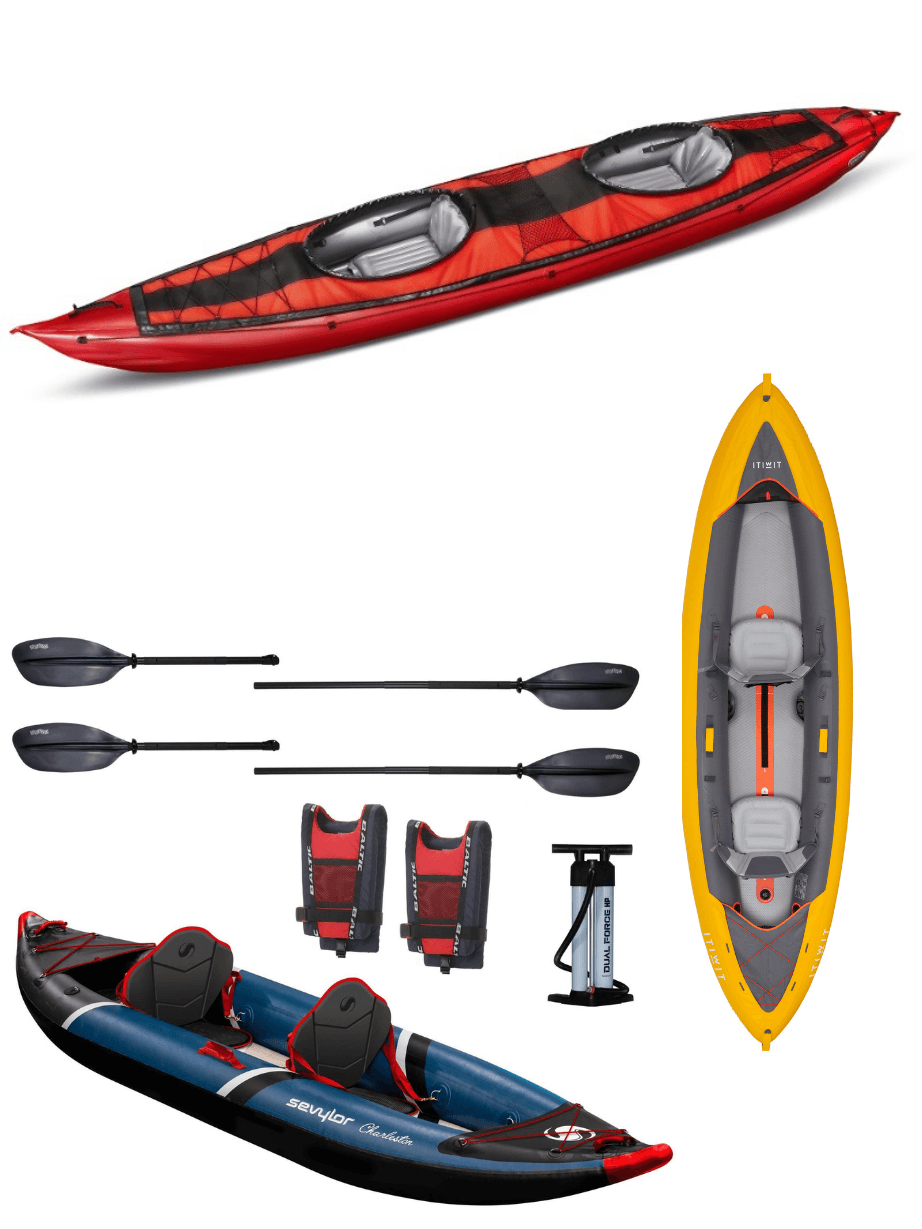

A two-person inflatable kayak is one of the easiest ways to get on the water in the UK. It fits in the boot of a car, needs no roof rack or storage space, and you can be paddling a lake or a sheltered bay within twenty minutes of parking. This guide covers what to look for and the two-seaters worth buying, from cheap and cheerful to touring-grade.

Why Choose an Inflatable Kayak?
When it comes to kayaking, many people immediately think of hard shell kayaks. However, inflatable kayaks, particularly two-person kayaks, offer a range of benefits that make them a perfect choice for many.
Lightweight Design
One of the most significant advantages of inflatable kayaks over hardshell kayaks is their lightweight design. This feature makes them easier to transport, whether you’re heading to a local lake or planning a more extended expedition. It’s a good idea to consider the weight if you’re looking to cover long distances or if you’ll need to carry the kayak a couple of feet from your vehicle to the water.
Easy Storage
Another added bonus of inflatable kayaks is their compact size when deflated, making storage a breeze. Unlike rigid kayaks, which require a lot of space or special racks, an inflatable kayak can easily fit in the boot of your car or a small storage space at home.
High-Quality Materials
Don’t let the term ‘inflatable’ fool you. Modern inflatable kayaks are made from high-quality materials that are puncture-resistant and durable. Many models even come with separate independent safety air chambers, providing an added level of security in the event of a puncture.
Versatility
Inflatables cover everything from pootling around a calm lake to proper touring. Cheap models are for sheltered flat water; better ones, with drop-stitch floors and skegs, track straight and cope with a bit of chop.
Factors to Consider When Buying a 2-Person Inflatable Kayak
Here's what to check before you buy:
Price Range
Kayaks come in various price ranges, from budget-friendly options like the Itiwit X100 to high-end models like the Gumotex Rush 2. Your budget will likely dictate your choices, but it’s essential to consider what you’re getting for the price. Sometimes, spending a bit more upfront can offer an excellent choice in the long run.
Maximum Weight Capacity
Different kayaks have varying weight capacities, and this is crucial if you plan to bring along extra gear or if more than one person will be using the kayak. Always check the maximum weight capacity to ensure it suits your needs.
Storage Space
If you’re planning long trips or expeditions, you’ll need a kayak with ample storage space. Look for models with grab lines and dedicated compartments to store your essentials securely.
Body Type
Not all kayaks are one-size-fits-all. Some are better suited for taller individuals, while others are more comfortable for those who are shorter or have a different body type. Make sure to consider this when choosing your kayak.
Additional Features
Some kayaks come with added bonuses like removable fins or skegs for better tracking, or convertible cockpits that allow for both solo and tandem kayaking. These features can enhance your paddling experience and offer greater versatility.
Safety Measures
Look for multiple separate air chambers, so the kayak stays afloat if one is punctured, and always carry the repair kit. If you're new to paddling, a lesson or a hire trip with a local outfitter is a cheap way to find out what you like before you buy.
Top 6 Best Inflatable Kayaks Available in the UK for 2026
Itiwit X100+
Price: £399.99
Insight: An excellent choice for first-time kayakers looking for a stable kayak without breaking the bank.
Key Features:
- High-pressure drop-stitch floor for rigidity.
- Inflatable seats and adjustable footrests for comfort.
- Hand pump included for easy inflation.
Pros and Cons:
Great for beginners and tandem kayaking, but not ideal for long trips on deep waters.
Overview:
The Itiwit X100+ is a high-quality, inflatable tandem kayak that offers a balance between comfort and performance. Its high-pressure drop-stitch floor provides rigidity, making it a stable choice for beginners. Although it’s not suited for rough waters, it’s a reliable pick for those looking to enjoy calm rivers and lakes.
Sevylor Charleston 2-Person
Price: £669 (Originally £790)
Insight: A great deal for those looking for a complete package, including paddles and a pump.
Key Features:
- Excellent stability and comfort with thermo-molded seats.
- Quick inflation time thanks to Boston valves.
- Added level of security with separate independent safety air chambers.
Pros and Cons:
Best on calm water for relaxed paddling.
Overview:
The Sevylor Charleston is a stable, comfortable all-rounder. It inflates quickly and comes with what you need to get going, so it suits people who just want to get on the water without fuss. It's at its best on calm lakes and rivers.
Aquaplanet Inflatable Kayak
Price: £449 (Originally £579)
Insight: a flexible one- or two-seater that comes as a complete kit.
Key Features:
- Triple chamber construction for sturdiness.
- Quick-dry polyester outer shell.
- Deep fill seat cushions for added support.
Pros and Cons:
Quick-drying but best suited for occasional use.
Overview:
The Aquaplanet works as a one- or two-seater, which is handy if you sometimes paddle alone. The three separate chambers add safety, and the polyester shell dries quickly so you can pack it away. It's a good choice for occasional use; regular paddlers will want something tougher.
Aqua Marina Steam 2-Person
Price: £429
Insight: A performance-oriented kayak that offers quick water drainage for whitewater kayaking.
Key Features:
- Super stiff drop-stitch floor for stability.
- Streamlined design for better tracking.
- Footrest support for comfort.
Pros and Cons:
Good all-rounder, but not for open sea.
Overview:
The Aqua Marina Steam is designed for those who seek performance and versatility. Its stiff drop-stitch floor and streamlined design make it suitable for both touring and mild river running. However, it’s not recommended for use on the open sea.
Gumotex Rush 2
Price: £1,649 (Originally £1,949)
Insight: A high-end kayak offering excellent performance and optional accessories.
Key Features:
- High-quality tandem inflatable with drop-stitch floor.
- Tough Nitrilon fabric construction.
- Comfortable seats and adjustable footrests.
Pros and Cons:
Excellent all-round performance, at a high price.
Overview:
The Gumotex Rush 2 is a premium kayak for people who paddle a lot. The Nitrilon construction is far tougher than PVC, it tracks well with the skeg fitted, and it's at home on the coast as well as lakes and rivers. You pay for the quality.
Gumotex Seawave
Price: Standard: £999, Set: £1,784.15
Insight: A high-performance kayak that can be customised for more demanding conditions.
Key Features:
- Suitable for sheltered sea and inland water
- Tough Nitrilon material
- Removable alloy skeg for straighter tracking
Pros and Cons:
Fast and capable, at its best on calm and sheltered water.
Overview:
The Gumotex Seawave is built for distance: long, efficient and stable enough for multi-day trips with gear. It handles more varied conditions than most inflatables but, like any inflatable, it's happiest on sheltered water.
Additional Gear to Consider
When you’re planning to spend time on the water, it’s not just the kayak that counts. Additional gear can make your kayaking experience more enjoyable and safer. Here are some items to consider:
Air Pump Options
- Foot Pump vs. Electric Pump: While some kayaks come with a hand pump, you might want to consider a foot pump for faster inflation or an electric pump for effortless setup.
Rod Holders
- If you’re keen on fishing during your kayaking trips, rod holders are a great addition. They free up your hands, allowing you to focus on paddling or simply enjoying the scenery.
Duffel Bag for Extra Gear
- A duffel bag can be a convenient way to carry extra gear, snacks, or personal items. Look for one that’s waterproof to keep your belongings dry.
Safety Measures
Safety should always be a priority when you’re out on the water. Here are some safety measures to consider:
Importance of a Repair Kit
- Repair kit: small punctures happen. A patch kit and a bit of practice mean a slow leak doesn't end your day.
Drain Holes and Back Support
- Drain holes help to keep the kayak dry, while adequate back support ensures a comfortable paddling experience. Make sure your chosen kayak offers these features.
Shoulder Straps for Easy Carrying
- Carrying a kayak can be cumbersome. Opt for a model with shoulder straps to make transportation to and from the water’s edge easier.
Best Places to Kayak in the UK
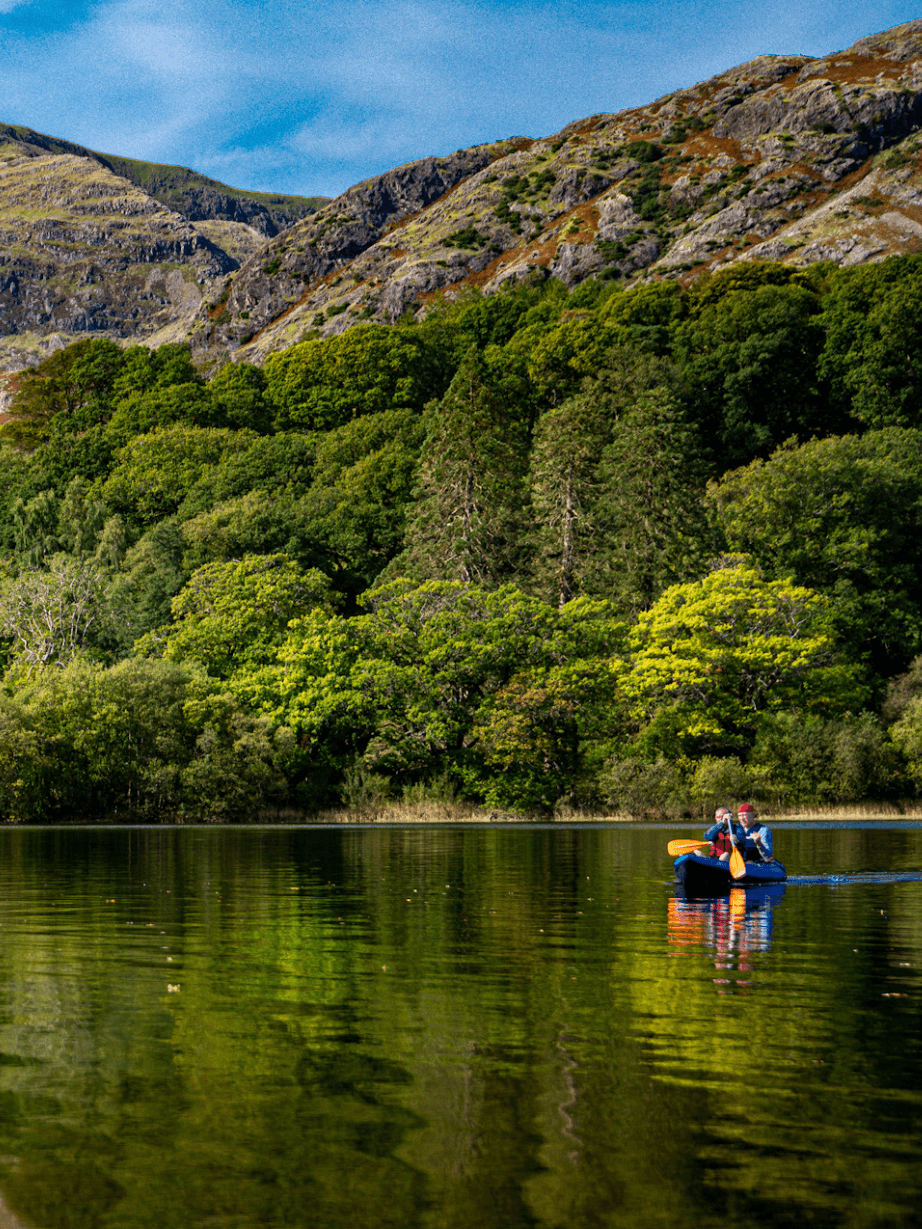
The UK has some brilliant places to paddle a two-seater, from sheltered lakes to coastal bays. A few favourites:
Lake District, England
Best For: Recreational kayaking, family outings
Highlights: calm water, mountain views
Insight: the Lake District is perfect for relaxed paddling. Windermere is the biggest lake, with plenty of space and launch points, while Derwentwater and Ullswater are quieter and arguably prettier. Check the local launch rules: some lakes have speed limits and permit schemes.
Scottish Highlands, Scotland
Best For: Experienced kayakers, adventure seekers
Highlights: Deep waters, challenging routes
Insight: the Scottish lochs offer bigger, more remote paddling. Loch Ness is long, deep and cold, and it can whip up big waves in a wind, so it's for experienced paddlers in settled weather.
Pembrokeshire Coast, Wales
Best For: Sea kayaking, wildlife spotting
Highlights: Rugged cliffs, abundant marine life
Insight: The Pembrokeshire Coast offers a unique sea kayaking experience. The area is rich in marine life, including seals and dolphins, and features dramatic cliffs and hidden coves. It’s a great option for those looking for more advanced elements in kayaking.
Norfolk Broads, England
Best For: Beginners, flat water kayaking
Highlights: Calm waters, scenic countryside
Insight: The Norfolk Broads are ideal for beginners and those looking for a relaxed kayaking experience. The area offers flat water and plenty of hire facilities, making it accessible even if you don’t own a kayak.
River Thames, England
Best For: Urban kayaking, sightseeing
Highlights: Iconic landmarks, varied routes
Insight: The River Thames offers a unique kayaking experience, allowing you to see some of London’s most iconic landmarks from the water. The river provides a range of experiences, from peaceful stretches in the countryside to more challenging routes near commercial outfitters.
Tips for Kayaking Beginners
If you’re new to kayaking, here are some tips to ensure a safe and enjoyable experience:
Choose the Right Kayak
Whether you opt for a hardshell kayak or an inflatable one, make sure it suits your body type and kayaking needs. Inflatable kayaks are generally easier to manage and are a good idea for beginners.
Learn Basic Techniques
Before heading out, familiarise yourself with basic kayaking techniques, such as paddling in a straight line and how to turn. Many locations offer beginner courses, which can be incredibly beneficial.
Safety First
Always wear a life jacket and ensure your kayak has the necessary safety features, like grab lines or separate independent safety air chambers. It’s better to be safe, especially if it’s your first time on the water.
Plan Your Route
Especially important for long trips, planning your route in advance can save you a lot of trouble. Make sure to check the weather conditions and consult local guides or maps.
Enjoy and Respect Nature
Kayaking offers a unique way to connect with nature. Enjoy the experience but remember to respect the environment by not littering and following local regulations.
Frequently Asked Questions About Inflatable Kayaks
1. Are inflatable kayaks safe?
Yes, modern inflatable kayaks are made from high-quality, puncture-resistant materials. Many also come with separate independent safety air chambers for added security in the event of a puncture.
2. How do inflatable kayaks compare to hardshell kayaks?
Inflatable kayaks are generally lighter and easier to store than hardshell kayaks. They offer a high degree of versatility and are suitable for a variety of water conditions, from flat water to more challenging routes.
3. Can I use an inflatable kayak for fishing?
Absolutely, many inflatable kayaks come with features like rod holders and ample storage space, making them suitable for fishing.
4. How long does it take to inflate an inflatable kayak?
The time it takes can vary depending on the kayak and the type of pump used. However, most inflatable kayaks can be inflated in 5 to 10 minutes using a high-pressure hand pump or an electric pump.
5. Can inflatable kayaks handle rough waters?
While inflatable kayaks are generally more stable due to their buoyant nature, they are best suited for calm to moderately choppy waters. Always check the manufacturer’s guidelines for the specific conditions your kayak is designed for.
6. How do I maintain my inflatable kayak?
Regular cleaning with mild soap and water, thorough drying before storage, and occasional checks for wear and tear are good practices. Some kayaks come with a repair kit for minor fixes.
7. Are inflatable kayaks good for beginners?
Yes, inflatable kayaks are often recommended for beginners due to their stability and ease of use. They are also generally more affordable, making them a great option for those new to the sport.
8. Can I take my dog on an inflatable kayak?
While it’s possible, make sure to check the maximum weight capacity of the kayak and consider the pet’s comfort and safety. It’s also a good idea to get a kayak with a more durable material if you plan to bring your pet along.
9. What accessories should I consider?
Essential accessories include paddles, a high-quality air pump, life jackets, and a carry bag for easy transportation. Additional items like a GPS, water-resistant phone case, and a first-aid kit can also be useful.
10. Where can I buy a high-quality inflatable kayak?
Many outdoor and sporting goods stores offer a range of inflatable kayaks. Online retailers often provide more variety and sometimes better prices, but make sure to read reviews and possibly consult experts before making a purchase.
If you're new to paddling, start with a stable, affordable two-seater like the Sevylor and stick to calm water. If you'll paddle often or want to go further, spend more on a Gumotex: they're tougher and much better on the water. Whatever you buy, wear a buoyancy aid, check the forecast, and tell someone where you're going. Paddle UK (formerly British Canoeing) has good advice on where you can paddle.