
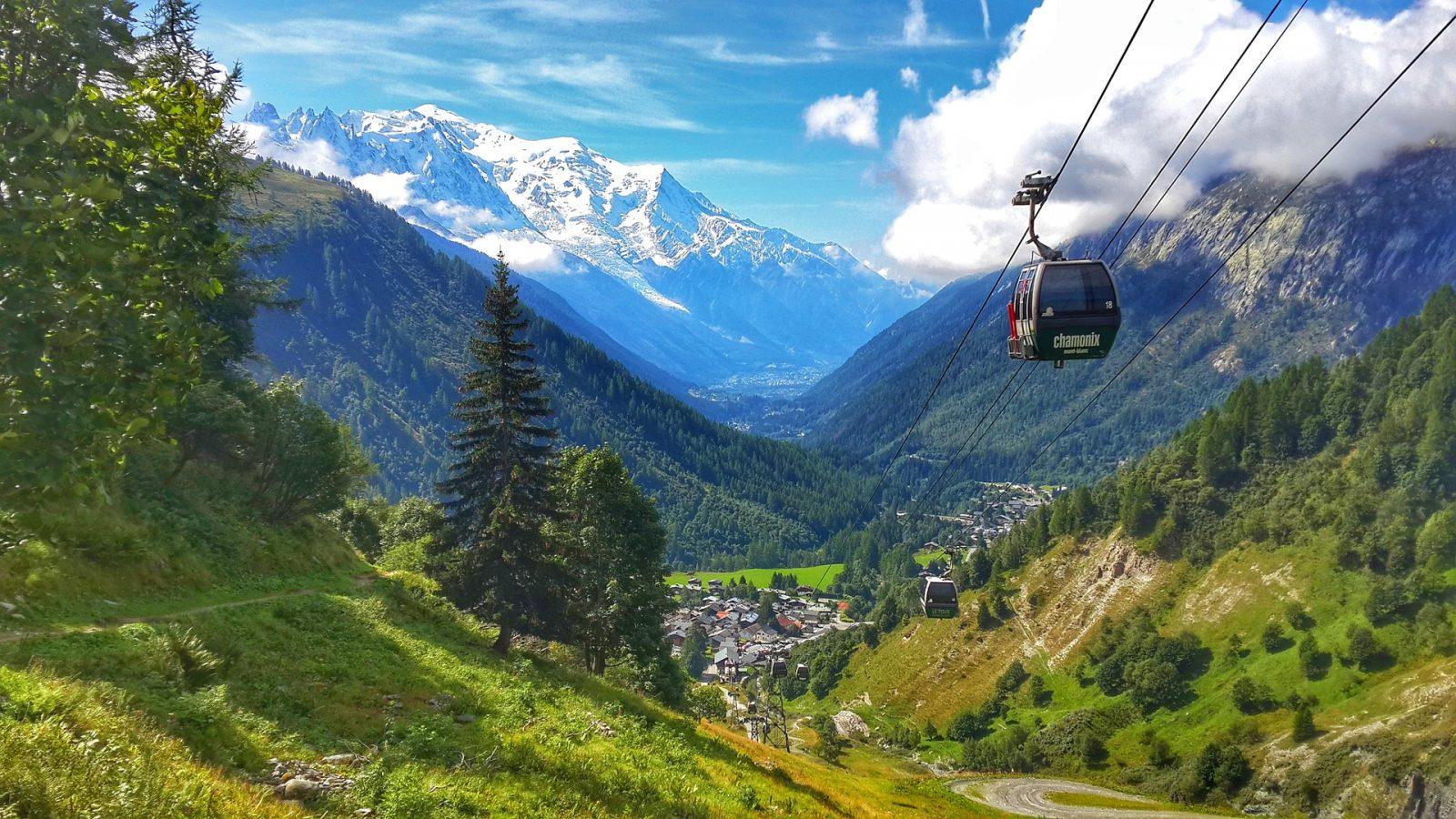
Chamonix is one of the best places in Europe for a long weekend in summer. The French Alps tower over the town, and whether you hike, climb, ride, run or fly, it's hard not to fall for the place.
The mountains are easy to access, thanks to the many lifts and gondolas that will get you up above the Chamonix valley in minutes, and the centre of Chamonix itself is a great place for relaxing after a day of adventure, with an abundance of great bars and restaurants. And if you’re in the market for some new outdoor gear, Chamonix has just about every kind of outdoor shop that you could imagine.
Through the ski season, Chamonix can be relatively expensive for accommodation, but in the summer months – which is classed as out of season here – there are some great deals to be found on hotels and lodges. There’s something to suit every budget too; from the luxury log cabins to the backpacker hostels.
I’ve been to Chamonix in summer a couple of times now, and it very quickly became one of my favourite places to spend a weekend. So in this guide, I’m going to give you all of the information you need for booking your own trip to Chamonix in summer and I’ll share my advice on how to pack the maximum amount of adventure into the weekend. From what to see, what to avoid, where to eat and how to get the most for your money.
PIN THIS
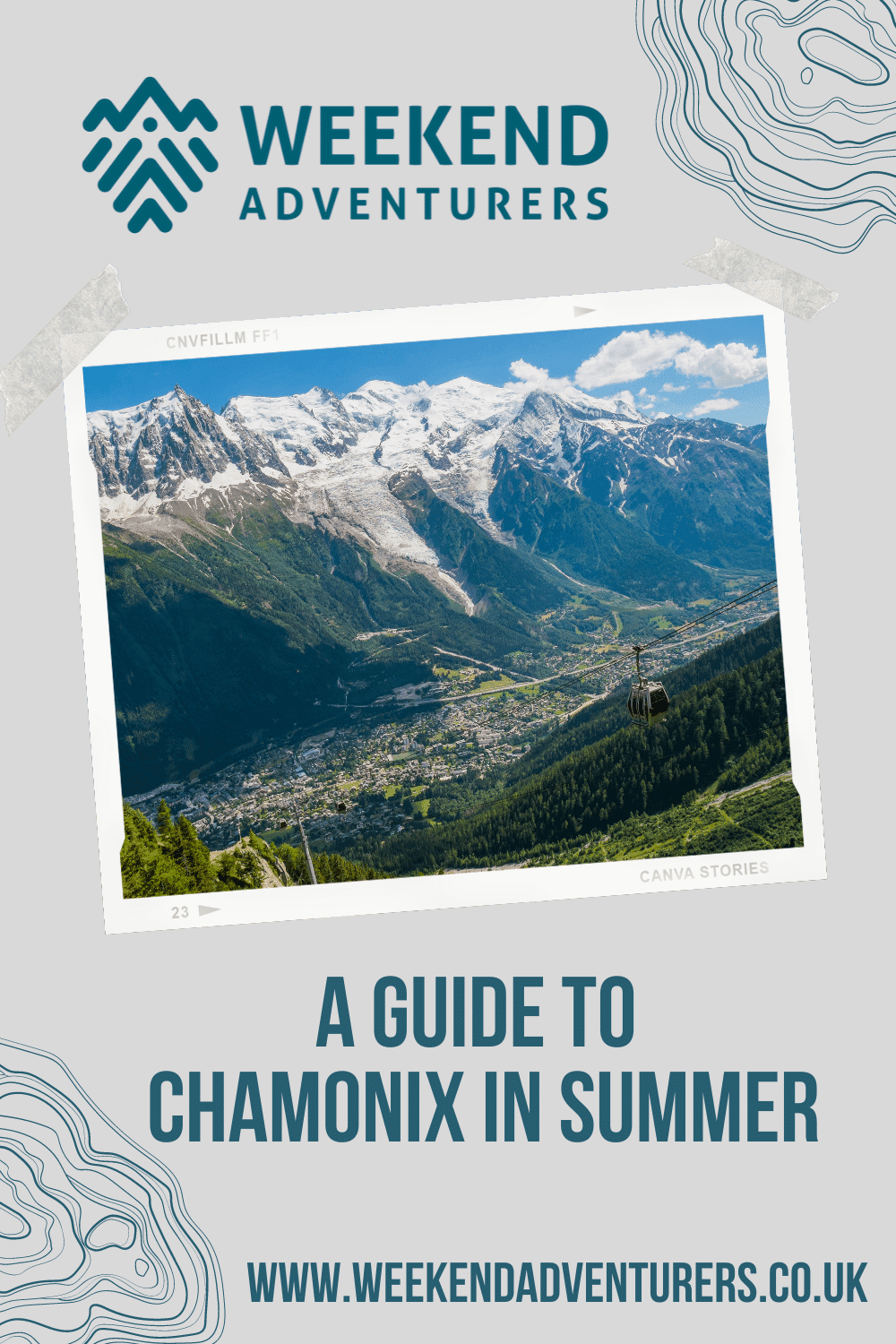
Where is Chamonix and How Do I Get There?
Chamonix is in southeastern France, in the Haute-Savoie area of the Auvergne-Rhone-Alpes region. This small town is famous for a couple of reasons. It was home to the very first Winter Olympics back in 1924, and nowadays it’s widely regarded as one of the oldest and best ski resorts in Europe. It’s also something of a central hub for mountaineering in the region and serves as the starting point for people climbing to the summit of Mont Blanc, the highest mountain in the Alps at 4,807 metres.
The nearest airport for easy travel from the UK is Geneva airport in Switzerland. A quick search on Skyscanner shows me that I could fly to Geneva from London, Birmingham, Liverpool, Bournemouth, Bristol, Manchester, Belfast, Nottingham, Edinburgh, Newcastle or Leeds, and most of those flights would take less than two hours and are relatively cheap (the flights I just looked at from Birmingham to Geneva on the last weekend of July cost £95 return).
To put that in perspective, I just did a quick search for train tickets and found that it’s around £180 return from London to Fort William in Scotland, for a journey that will take over nine hours. So, basically, you could be at the foot of Mont Blanc for less time and money than you could be at the foot of Ben Nevis for. As much as I love Scotland, that’s an easy choice, right?
There are plenty of transfer options from Geneva airport to Chamonix. I used Alpy Bus on both of my trips and it was as easy as it could possibly be. Alpy Bus have a small stand inside the airport and will take you directly to your hotel, or to the central bus station in Chamonix. The journey takes around 90 minutes and I highly recommend that you try and grab a window seat. The views as you get closer to Chamonix will only add to your excitement about the trip.
What’s in Chamonix?
For a small town, Chamonix has a big personality. It sits in a narrow valley with huge mountains on both sides, so there's a view wherever you go. I don't know many places where you can sit with a cold beer on a hot day, in the middle of town, looking straight up at glaciers.
There are only around 8,000 permanent residents in Chamonix, but this is a tourist hub and there is always a hustle and bustle about the place. Chamonix is famous for its winter season, so it’s no surprise that the town is made for the Apres-Ski scene. For a relatively small town, there are loads of options for sitting in the afternoon sun and enjoying a cold beer, and after that, there are dozens of options for restaurants and bars to spend the evening in.


It might be cheap to fly to Chamonix, and accommodation costs are reasonable through summer too, but eating and drinking in the town can be pretty expensive and a night out with food and drinks will cost you a fair bit more than an average night out in the UK. That said, having a cold beer after an epic day in the mountains is definitely worth paying an extra couple of Euros for.
Alongside all of the bars and restaurants, Chamonix town is made up of a pretty impressive collection of outdoor clothes and gear shops, alongside the usual souvenir shops. Think of all of your favourite brands, all of your favourite shops and all of the hiking, skiing and mountain biking gear you could ever dream of and then put them all together in the space of a few streets and you have Chamonix. You could easily spend thousands of Euros kitting yourself out with new gear here, or you could just window shop while you wander around the town, soaking up the atmosphere.
What to See in Chamonix in Summer
If it’s your first visit to Chamonix then there are a few things that you have to see…
- Mer de Glace
- Lac Blanc
- Aiguille du Midi
I usually try to avoid the most ‘touristy’ places, but in the case of Chamonix these really are ‘must-see’ places and you can’t really spend a weekend here without ticking off at least a couple of these.
Mer de Glace
The Mer de Glace ("sea of ice") is the largest glacier in France, around 7km long and up to 200 metres deep, though, like every Alpine glacier, it's shrinking fast. You can see it from the valley.
Take the red rack railway from Chamonix up to Montenvers: the ride is half the fun. From the station there's a viewpoint over the glacier, then a gondola and several hundred steps down to the ice cave cut into the glacier. The number of steps grows every year as the ice retreats, which is a sobering thing to see.


It’s worth paying attention to the signs as you climb down the steps to the ice caves. At various points, the signs will show markers of where the glacier used to reach in years gone by. It really drives home the fact that the planet is warming up and that glaciers are retreating at an alarming rate.
Once you’ve visited the ice caves and taken plenty of photos of the glacier from the lookout point, you have a few options for what to do next. There are several hiking routes that begin near the Montenvers station, or if you’re looking for something less active you could stop for some food and drink at the Grand Hotel du Montenvers and enjoy the epic views while you dine. Alternatively, you could head back down into Chamonix the same way you came up, via the famous red train.
Lac Blanc
For those that are new to Alpine hiking and are looking for a bit of a taster session in the mountains, you’d be hard-pushed to find a more suitable walk than the popular Lac Blanc walk. It’s easy to follow, has spectacular views from start to finish, and can be comfortably tackled in half a day. It’s definitely one of the best walks to tackle in Chamonix on a summer day.
The Lac Blanc hike starts from the top of the Flégère cable car, a couple of kilometres from the centre of Chamonix. We walked there rather than working out the bus: about 30 minutes upstream on the gravel track beside the river, with a coffee from town and mountain views all the way. It was a great way to start the day.
It costs around €25 for a return trip on the cable car; well worth the money to cut out a couple of hours of lower-level walking. Once at the top you will easily pick up signs for Lac Blanc on the fingerposts, as well as many other mountain walks. The signs will state that it’s about a two-hour walk up to Lac Blanc, but if it’s your first time up in these mountains you will probably want to add 30 minutes onto that for all of the photo stops that you’ll take along the way. At least, that was the case for me.
The route is well-worn and you shouldn’t have any problem following the trail. However, these are some serious mountains and weather and visibility can change in seconds, so having a good level of hillwalking experience and some navigation skills are recommended. There are also several sections of loose scree along the trail, so a decent pair of walking boots and shoes will help you to maintain grip and balance.
Lac Blanc sits at 2,352 metres with a view straight across to the Mont Blanc massif. On a still day the mountains are reflected perfectly in the lake. From here, head back the way you came or carry on along one of the other trails.

Aiguille du Midi
What makes Chamonix special in summer is how quickly you can get high. Cable cars leave from town to both sides of the valley, and the one you have to do is the Aiguille du Midi: about 20 minutes from the town centre to 3,842 metres, with views across the French, Italian and Swiss Alps.
To give that some perspective, Ben Nevis – the highest mountain in the UK – is 1,345 metres. So the opportunity to be transported to a height nearly three times that can’t be missed.


As you walk around the viewing platforms, soaking up the views, you may notice that you feel very slightly light-headed or maybe even a little breathless. This is due to the altitude and you’ll begin to understand how the climbers feel as they make their ascent to the summit of Mont Blanc, almost 1000 metres above you. Don’t worry, you’ll soon get used to it.
For experienced mountaineers it's the starting point for routes on Mont Blanc and the surrounding peaks. For everyone else there's a café, a shop, and the glass box, "Step into the Void", where you can stand over a 1,000-metre drop. Altitude affects some people up here, so take it slowly.
Where to Stay in Chamonix in Summer
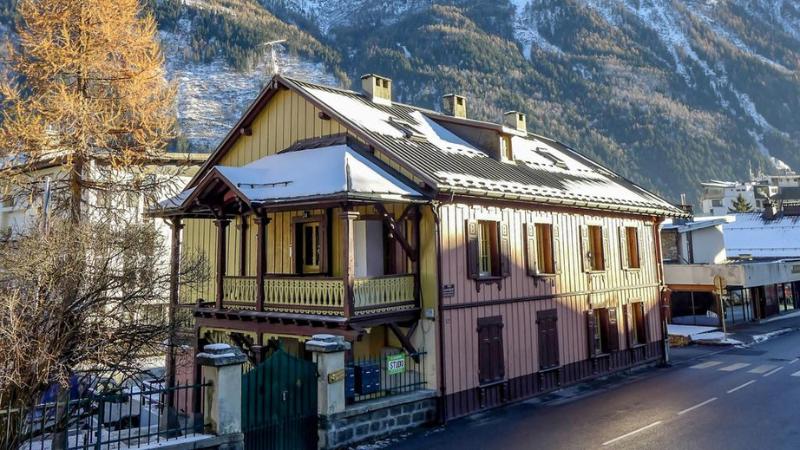
Through the winter months, accommodation is in high demand in Chamonix. The world-class ski slopes ensure a steady stream of tourists heading to Chamonix for a winter break. It’s this demand that keeps the prices quite high through the snowy months. Chamonix in summer is a different story. Although Chamonix is not quiet through the warmer months, there isn’t quite as much demand for beds and that means that there are some great deals to be found on hotels and Airbnbs.
There’s something to suit most budgets too; from large, luxury cabins at the foot of the mountains, to cheap and cheerful hostels for backpackers, and everything in between.
On my last trip, I stayed in a two-bedroom apartment right in the centre of town and I wrote a review about it which you can read here…
More Accommodation in Chamonix
Where to Eat and Drink in Chamonix
As you’d expect from a French tourist town like Chamonix, there is an abundance of options for eating out. From Michelin-starred restaurants to McDonalds, there is something to suit everyone. Surprisingly, there seemed to be more Italian-themed pizza and pasta restaurants than local cuisine, or maybe my eyes and nose were just drawn to the sights and smells of carbs after a day in the mountains.
If you’re looking for somewhere to sit with a cold beer and watch the world go by, you can’t go wrong with Brasserie de L’M. It’s located right in the centre of town, has loads of outdoor seating, and there are often street performers nearby to provide a great soundtrack and sense of atmosphere. And if you’re looking for a quick bite after a day of exploring, there’s a quirky little place by the river called Cool Cats and they sell the best hot dogs I’ve ever tasted.
What’s the Weather Like in Chamonix in Summer?
Like most mountainous regions, the weather in Chamonix can be unpredictable. I’ve been to Chamonix twice, both times during the first week of September. The first time, it was baking hot, and in the high twenties every day. I hiked up to Lac Blanc in shorts and a t-shirt and had some worries that I hadn’t packed enough water. Exactly a year later, I was back in Chamonix and it was snowing. I took a cable car up to Planpraz and spent a full day hiking in the snow, with zero visibility over the Chamonix valley.
That snow was unseasonably early, and in general, the weather is pretty great through the summer months. But it always makes sense to pack some warmer clothing too, and some waterproofs, of course.
June, July and August are the warmest months to visit, with the average temperature being between 18-21 degrees. September is slightly cooler but has less average rainfall for the month, which is why I have chosen that month to go both times (plus it’s quieter and cheaper than the main summer months).
Summer Adventures in Chamonix
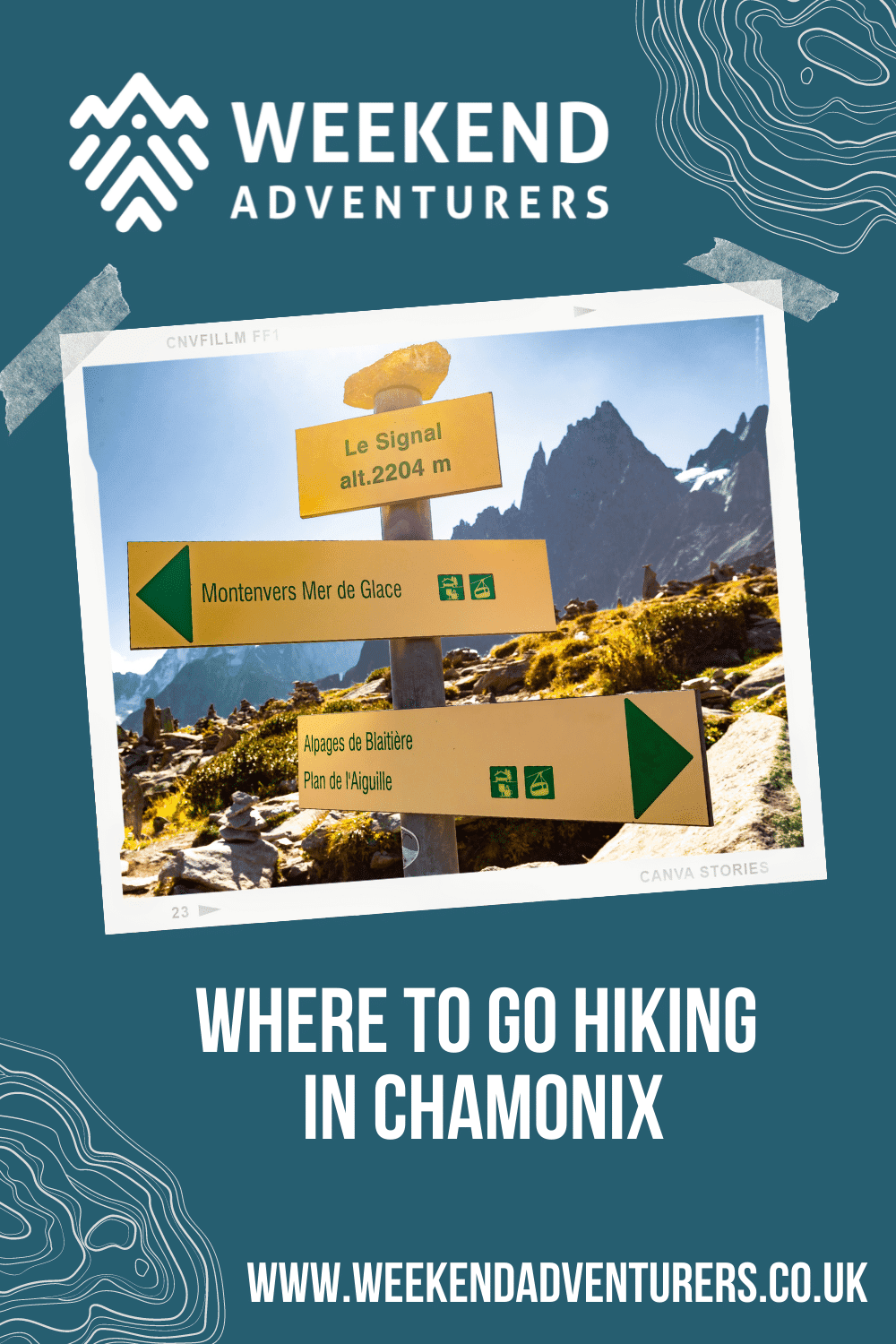
But you're here for the mountains. Chamonix is brilliant for hiking, mountain biking, climbing and trail running. You could spend a month here and find a new trail every day. If you've only got a long weekend, here are a few ideas:
Hiking
The hiking is world-class. If you have the time, the Tour du Mont Blanc is a 170km hut-to-hut trek around the massif; it takes most people about 11 days, so for many of us, me included, it's one for the future. There are plenty of brilliant day hikes, though:
Lac Blanc
We've covered this one already. It's easy to follow, with great views from start to finish, and comfortably done in half a day. One of the best day walks in Chamonix.
Grand Balcon Nord
This hike starts at the Montenvers station near the viewpoint over the Mer de Glace and it follows a meandering mountain trail over to the midway station of the Aiguille du Midi cable car, where you can ride back down to the town. Expect mind-blowing views over glaciers, jagged peaks and pristine valleys. You can walk this route in reverse if you prefer, but I think Montenvers to Plan d’Aiguille is the best way to walk this as you’ll have views up towards Mont Blanc as you walk.
Grand Balcon Sud
On the opposite side of the valley is the Grand Balcon Sud hike. This hike begins at the mid-station of the Flégère cable car (the same starting point as the Lac Blanc hike). This trail wanders through woodland, Alpine meadows and rocky plateaus as you make your way towards Planpraz. I’m running out of ways to tell you how spectacular the views are across the valley towards Mont Blanc, but this hike is pretty special. Once at Planpraz, you can take another short cable car journey up to the summit of Brévent before walking back down to Chamonix.


Mountain Biking in Chamonix
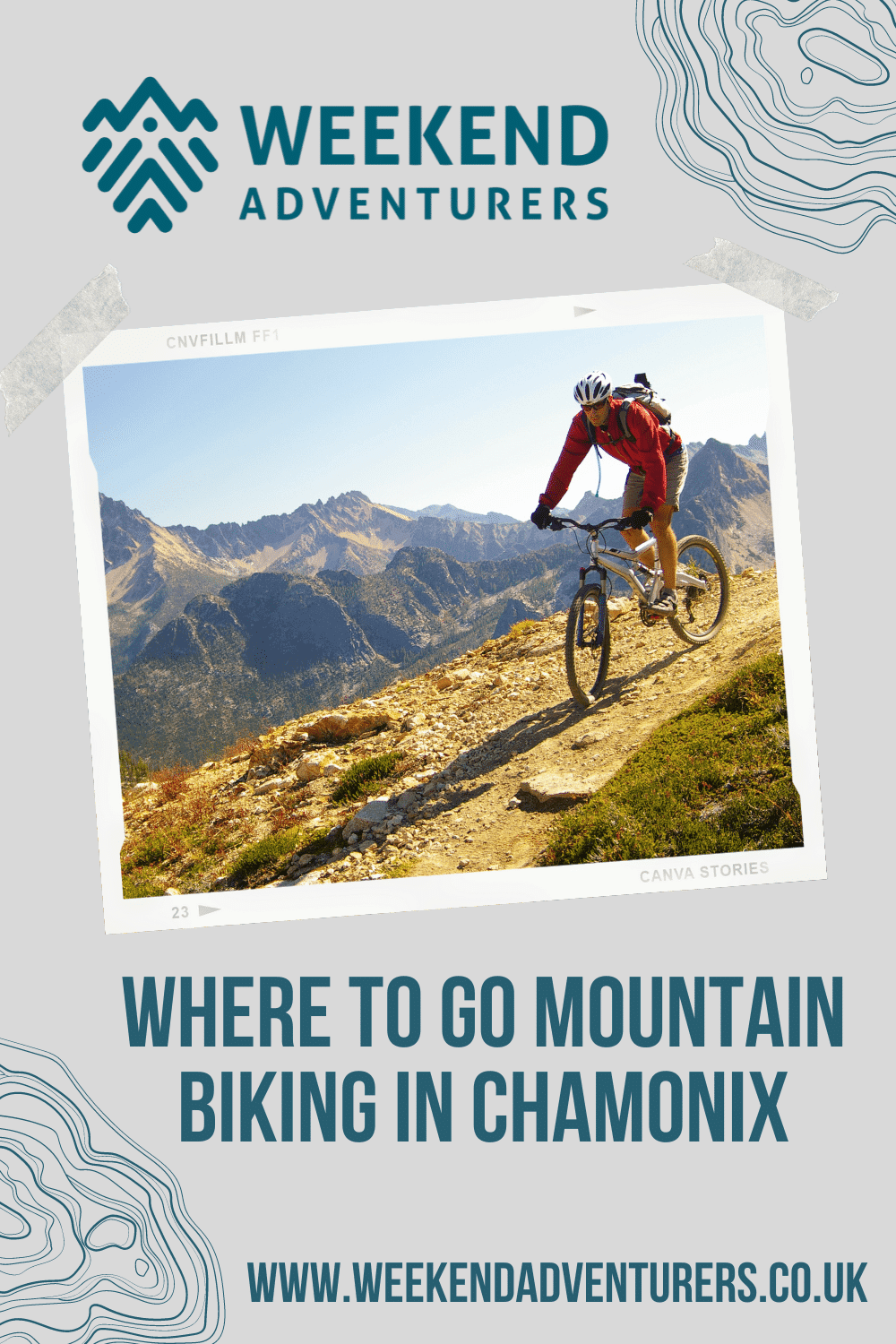
The mountain biking is excellent, with lift access to high trails. There are steep, technical descents for experienced riders and flowing singletrack for everyone else. You can hire bikes in town, and guided rides take the guesswork out of finding the best trails. Check which trails are open to bikes: some popular hiking paths are closed to them in July and August.
Here are just a few of the best areas to go mountain biking in Chamonix…
La Tour
Le Tour, at the end of the valley, has some of the more natural, flowing trails for you to enjoy. It’s a little bit more on the mellow side than some of the other mountain biking areas in Chamonix, but that’s not to say that it’s without its challenges, and it has more than enough to keep even the most competent of riders entertained. If you take your passport with you, you can even nip over the border into Switzerland to ride a few of their trails while you’re there.
Grands Montets
Grands Montets is an area well known for skiing in the winter season, but when the snow is gone it’s a perfect place for mountain biking. Expect fast descents, tricky corners and bone-rattling rocks. Best suited to intermediate to advanced riders, the route down from the top of the Lognan cable car down to the village of Lavancher is an epic ride.
Les Houches
Les Houches has more of a bike park feel to it than the other areas, but that’s not necessarily a bad thing. Here you can expect man-made, purpose-built trails with endless flow. And the best bit about it: when you finally reach the bottom you can just jump straight back in the cable car and do it again.
PIN THIS
Trail Running in Chamonix
Of course, wherever there are mountain trails there are trail runners, and Chamonix is a dream location. I have to admit that I didn’t do any running on either of my trips to Chamonix in the summer, I was more interested in hiking and exploring. It’s on my list for my next visit though. If trail running is your main focus then there is a Chamonix trail running guide available on Amazon that features over 40 routes, so it is probably worth grabbing a copy so you can plan your runs in advance.
Paragliding
Paragliding over the valley is one of the best ways to see the mountains. On a good day, the sky over the town is full of wings, and several companies in town offer tandem flights.
White Water Rafting in Chamonix
If you’re looking for a rainy day activity in Chamonix then white water rafting might be just the thing. There are several options for rafting trips, from two-hour taster sessions right through to full-day expeditions. If you’re looking for thrills, then rafting is best done just when the snow is melting and causing the rivers to flow at their fastest.
Via Ferrata in Chamonix
Via Ferrata is a great way to sample the thrills of climbing. Italian for Iron Road, Via Ferrata is a series of metal cables and iron footholds in the mountains that you can clip into and enjoy a climb in safety.
In Chamonix, the Via Ferrate route ‘La Via des Evettes’ begins about a 20-minute walk away from the Flègère chairlift. The route takes roughly 2 hours, but as you can only move as quickly as the people in front of you, it can take longer in the summer months when many families are taking part.
Climbing
Chamonix is world-famous for its climbing routes and the town is steeped with Alpine history and the stories of the many first attempts that have taken place here. There are 27 peaks above 4,000 metres within the Mont Blanc Massif, so you could spend an entire summer here and never run out of new places to climb.
There are plenty of local guides who can take you climbing, but if you’re experienced enough to tackle the routes yourself, there are guidebooks available on Amazon that describe all of the climbs in detail.
Book Your Trip to Chamonix this Summer
Chamonix is one of the best places in Europe for a summer weekend of adventure. It's an easy flight to Geneva and about an hour's transfer, there's accommodation for every budget, and you won't run out of things to do.
PIN THIS