
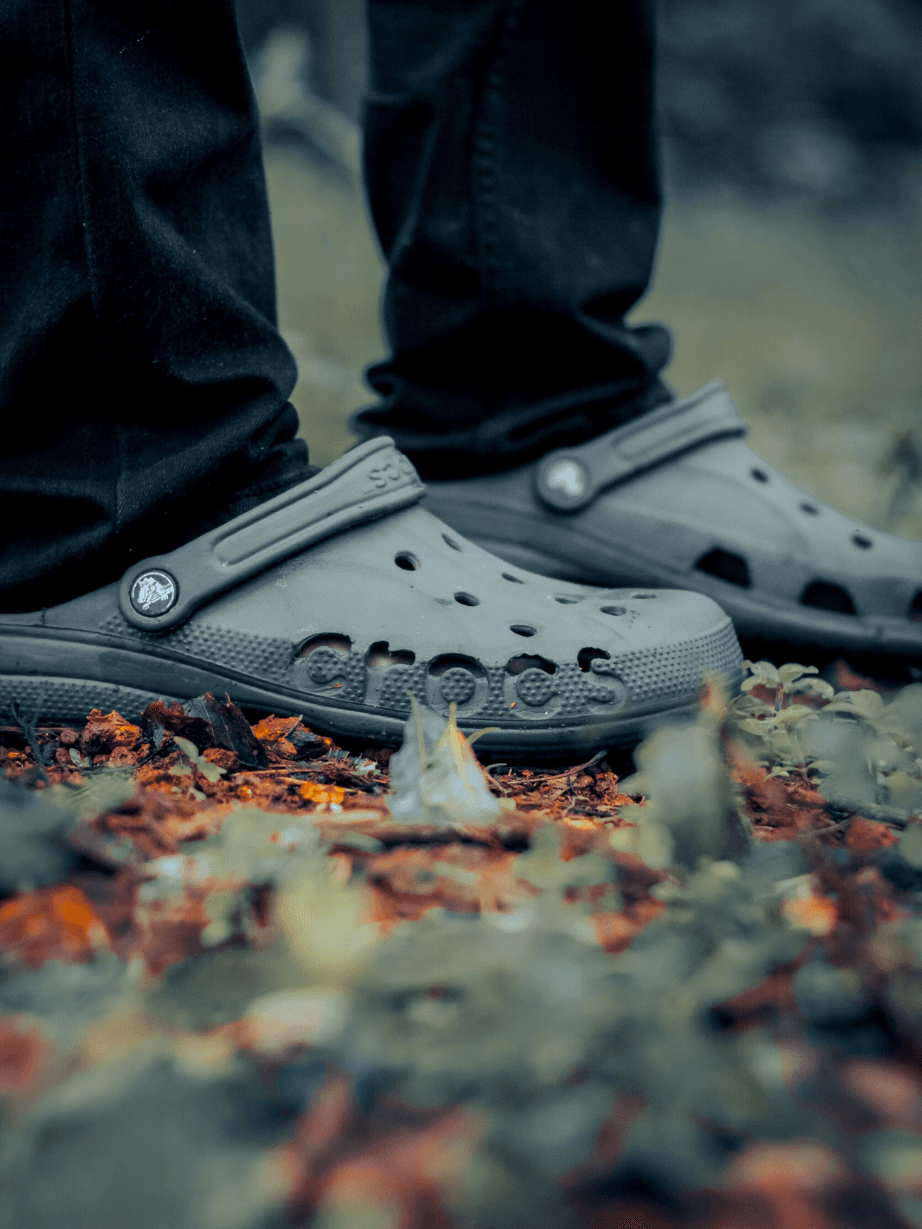

Crocs on a hike sounds like a joke, but more people wear them on the trail than you'd think, and Crocs now make models aimed at walking. They're light, they breathe and they're comfortable. The question is whether that's enough on British paths.
Short answer: for a gentle stroll, a campsite or a river crossing, yes. For a proper hill walk, no. Here's why.
From the misty peaks of Snowdonia to the scenic pathways of the South West Coast Path, we’ll tread carefully into this debate. This post aims to balance the scales, acknowledging the purist’s perspective while considering the potential of Crocs to offer a different kind of outdoor experience. Could these iconic clogs be the unsung heroes of a casual hiker’s wardrobe or are they simply out of their depth? By the end of this trail of thought, we hope to have a clearer view.
Below I compare Crocs with walking shoes and sandals on support, grip and protection, look at the more outdoorsy models, and explain where they do make sense.
The Love-Hate Relationship with Crocs
Crocs are the Marmite of footwear: you either love the comfort or hate the look. They have a fan base from toddlers to gardeners, and they split opinion even more when it comes to walking.
For some, Crocs are the epitome of comfort. Their foam construction moulds to the foot, offering a custom fit that’s hard to find in more rigid shoes. They’re celebrated for being airy, quick to dry, and easy to slip on and off – attributes that appeal to the leisurely wanderer and the avid camper alike. Words like “comfortable shoes” and “quick trip” often find themselves in the same sentence as Crocs.
Experienced walkers will point to what walking boots give you: ankle support, a grippy sole and protection from rocks and roots. Crocs offer very little of that, and much of Britain's walking is on rough, wet, uneven ground.
Yet, it’s this very divide that makes the discussion around hiking in Crocs so interesting. Could these iconic clogs, known for their casual comfort, make the transition to the hiking trails, or are they destined to remain on the periphery, the choice of footwear for post-hike relaxation rather than the hike itself? The answer isn’t as straightforward as you might think, and it requires us to look beyond prejudices and preconceptions, to explore what Crocs really have to offer to the hikers’ feet.
Features and Benefits of Crocs for Hiking
Crocs are not what comes to mind when picturing a hike through Britain’s verdant countryside or up its craggy peaks. Yet, the features that make Crocs a favourite for gardeners and beachgoers might have more to offer hikers than first assumed.
Weight
One of the most lauded features of Crocs is their weight – or lack thereof. These feather-light clogs could mean the difference between feeling sprightly or slogged down after miles of trekking. For those accustomed to the heft of traditional hiking boots, the breezy nature of Crocs could be a welcome reprieve on less demanding trails.
Ventilation
With their signature holes and foam construction, Crocs offer excellent ventilation, keeping feet cooler and less prone to the dampness that can lead to blisters. They’re also non-absorbent and quick drying, a great feature for unexpected wet crossings or the notorious British drizzle. This makes them a potential candidate for short hikes on well-trodden paths or for forays into the outdoors when heavy-duty waterproofing isn’t a necessity.
Comfort
The contoured footbed of Crocs is praised for its comfort, which can be crucial on long-distance hikes. Their foam material allows for a degree of cushioning that adapts to the foot over time. For those with foot issues or who find the rigid structure of typical hiking shoes uncomfortable, Crocs could present a more forgiving option.
Crocs’ ease of use is another point in their favour. They transition smoothly from a casual walk in the park to a spontaneous jaunt on a nature trail. For the casual hiker who values simplicity, this could be quite appealing.
However, the benefits must be weighed against safety concerns. The traction on Crocs, while suitable for flat and dry surfaces, will not provide the grip needed for the steep inclines or muddy conditions often encountered on British hiking trails. Unfortunately, the open design offers little protection against the elements or the accidental stub against a hidden root or rock.
With benefits such as ‘foam construction’ and ‘quick drying’, you must ponder if these features make Crocs a viable option for hikers. They may not replace the rugged build of a hiking boot, but they could serve as an adjunct – a lightweight, comfortable option for certain conditions and terrains, particularly during the warmer and drier months. As we venture into the comparison with other hiking footwear, it becomes increasingly clear that while Crocs might not be the ‘right hiking shoe’ for every trail, they have carved out their own niche in the outdoor gear landscape.
Crocs vs Hiking Sandals
When considering alternative hiking footwear, hiking sandals are often the first port of call for those seeking a break from traditional boots. Here, we weigh the pros and cons of Crocs against their strappy counterparts.
Hiking sandals, like Crocs, offer a liberating break from the confines of boots. They provide a level of breathability that’s unmatched, ideal for keeping feet cool and comfortable on a hot day’s hike. Crocs share this open design, but with a more substantial upper, offering a different balance between ventilation and protection.
One of the critical areas where hiking sandals often have the upper hand is in the traction department. They are specifically designed with rugged soles to grip the uneven and challenging surfaces found on many hiking trails. Crocs, though improved with their ‘All Terrain’ options, may still lag in providing the confidence needed on slippery or steep paths.
Another point to consider is the secure fit offered by hiking sandals, with adjustable straps that ensure the footwear stays put, even in challenging conditions. Crocs, with their more relaxed fit, may pose a risk of slipping off at inopportune moments, though models with an adjustable heel strap aim to mitigate this issue.
Both Crocs and hiking sandals excel in environments where water is involved. They are quick to dry and provide an easy solution for river crossings or beach-side strolls. However, in terms of “water shoes,” hiking sandals might offer more in the way of foot protection with their closed-toe designs.
Where Crocs can beat walking sandals is comfort: the soft foam is forgiving underfoot. The Classic Hiker Clog has a chunkier sole and more coverage, trying to bridge the gap between an everyday Croc and something more practical.
The Verdict
Both Crocs and hiking sandals present themselves as viable options for those seeking a lighter, more breathable alternative to boots. While hiking sandals may offer better security and traction, Crocs bring a unique comfort and ease that could make them suitable for more casual hikes, short distances, or as camp shoes after a day’s trek. The choice ultimately hinges on the type of hike, the terrain, and personal preference for comfort versus stability.
Crocs vs Traditional Hiking Shoes
The classic hiking shoe is a staple in the walker’s wardrobe, designed to tackle a wide array of terrains and weather conditions. How do Crocs compare to these tried-and-tested trail companions?
Traditional hiking shoes are built to last. They’re constructed with tough materials to withstand the abrasive elements of the trail, from sharp rocks to thorny underbrush. Crocs, while durable in their own right, are made from a softer foam that may not offer the same level of protection against the relentless wear and tear of regular hiking.
Support is the big weakness. Walking shoes and boots hold your foot and ankle in place, which reduces the risk of a twisted ankle on uneven ground. Crocs, especially the classic styles, don't. Newer models have sturdier soles and adjustable straps, but they still fall well short of a proper walking shoe.
The soles of hiking shoes are a key feature of their design, crafted to provide optimal grip on a variety of surfaces. They’re thick, providing a barrier between the foot and the often unforgiving ground. Crocs, on the other hand, typically feature a thinner sole, which might be comfortable for casual wear but could prove punishing over long distances or on particularly rugged trails.
In the UK, where the skies can open up without warning, the waterproof nature of hiking shoes is a godsend. They are designed to keep feet dry even in the wettest conditions. While Crocs are water-friendly and quick to dry, they don’t provide the same level of protection from getting wet in the first place, which could lead to discomfort on longer treks.
Despite these shortcomings, there’s a case to be made for Crocs in the hiking world. For one, they can be incredibly convenient for shorter hikes or as a secondary pair of shoes to change into post-hike, offering feet a respite from the confines of heavier boots. They’re also an excellent option for campsite wandering or as a part of the gear for a multi-activity outdoor adventure, where their versatility shines.
The Verdict
While Crocs offer certain benefits such as comfort and ease of use, they simply cannot replace traditional hiking shoes when it comes to the more demanding aspects of hiking. They lack the support, protection, and traction that are essential for tackling the diverse and often challenging British landscapes. However, as part of a hiker’s kit, especially for those leisurely days or as an after-hike relief, Crocs could very well find their place.
The British Hiking Scene
The UK presents a unique set of challenges for any hiker, with its famously unpredictable weather and varied landscapes. From the rolling hills of the Cotswolds to the rugged terrain of the Scottish Highlands, each trail demands something different from your footwear.
In the UK, the weather can be as varied as the accents. A day that starts with sunshine can quickly turn to rain, hail, or even snow in some areas. While Crocs are praised for their quick-drying features, they offer little in the way of warmth or water resistance, making them less than ideal for the often wet conditions encountered on British trails.
British hikes can take you over a smorgasbord of terrains – muddy fields, steep fells, rocky paths, and everything in between. Traditional hiking shoes are designed with these challenges in mind, providing the grip and stability needed to navigate safely. Crocs, with their smoother soles and flexible material, may struggle to provide the same level of confidence, especially on slippery or uneven ground.
However, not all hikes demand the fortitude of a waterproof boot. On well-maintained paths or during the drier months, the lightweight and breathable nature of Crocs could be an asset, keeping your feet cool and comfortable on less strenuous walks.
While Crocs might find a place on the gentler paths and in the casual hiker’s heart, the consensus among British hikers will undoubtedly lean towards more traditional hiking footwear. That said, Crocs could be considered for certain types of hikes – perhaps a quick jaunt in the countryside or a short walk on a sunny day.
The Verdict
The adaptability of Crocs to the British hiking landscape is, at best, limited. They might be well-suited to casual, short-distance walks on clear days, but for the quintessential British hike – which could involve any weather and any terrain – they fall short. The ideal hiking shoe is one that can handle rocky terrain, wet conditions, and still keep your feet comfortable over longer distances. For those hikes, it’s best to stick with the traditional hiking boots or shoes.
Popular Crocs for Hiking
Several Crocs models are aimed at outdoor use. None of them replaces walking boots, but some are better than others:
Classic Lined Neo Puff Boot

These boots take the iconic Croc comfort and add a layer of warmth with a lined interior, something that’s a nod towards the colder British weather. With a more boot-like appearance and enhanced coverage, they’re a step towards bridging the gap between casual Crocs and outdoor footwear.
All-Terrain Clog

Designed with a more rugged outsole and enhanced tread, the All-Terrain Clog is Crocs’ answer to the call of the wild. While they won’t rival the grip of dedicated hiking shoes, they do offer an improved experience over the standard models for those who are set on Crocs for their outdoor adventures.
Offroad Sport Clog

This model has a chunkier, more aggressive sole and a sportier look. Crocs pitch it for rougher ground, though how rough is debatable.
Echo Boot

These boots offer a sleeker look with the promise of Crocs comfort. They could be considered for urban hikes or leisurely walks in the park, where the terrain isn’t too demanding, and the style is just as important as function.
Classic Hiker Clog

With a design that hints at a more traditional hiking shoe aesthetic, the Classic Hiker Clog could serve well for those looking for the Crocs brand of comfort with a nod to the hiking world. It’s possibly the most appropriate for light trails and short day hikes.
The Bottom Line
Crocs are fine for campsites, beaches, river crossings and short, easy walks on good paths, and they're bliss to slip on after a long day in boots. For anything with rough ground, steep slopes, mud or wet rock, wear proper walking shoes or boots: your ankles will thank you.