
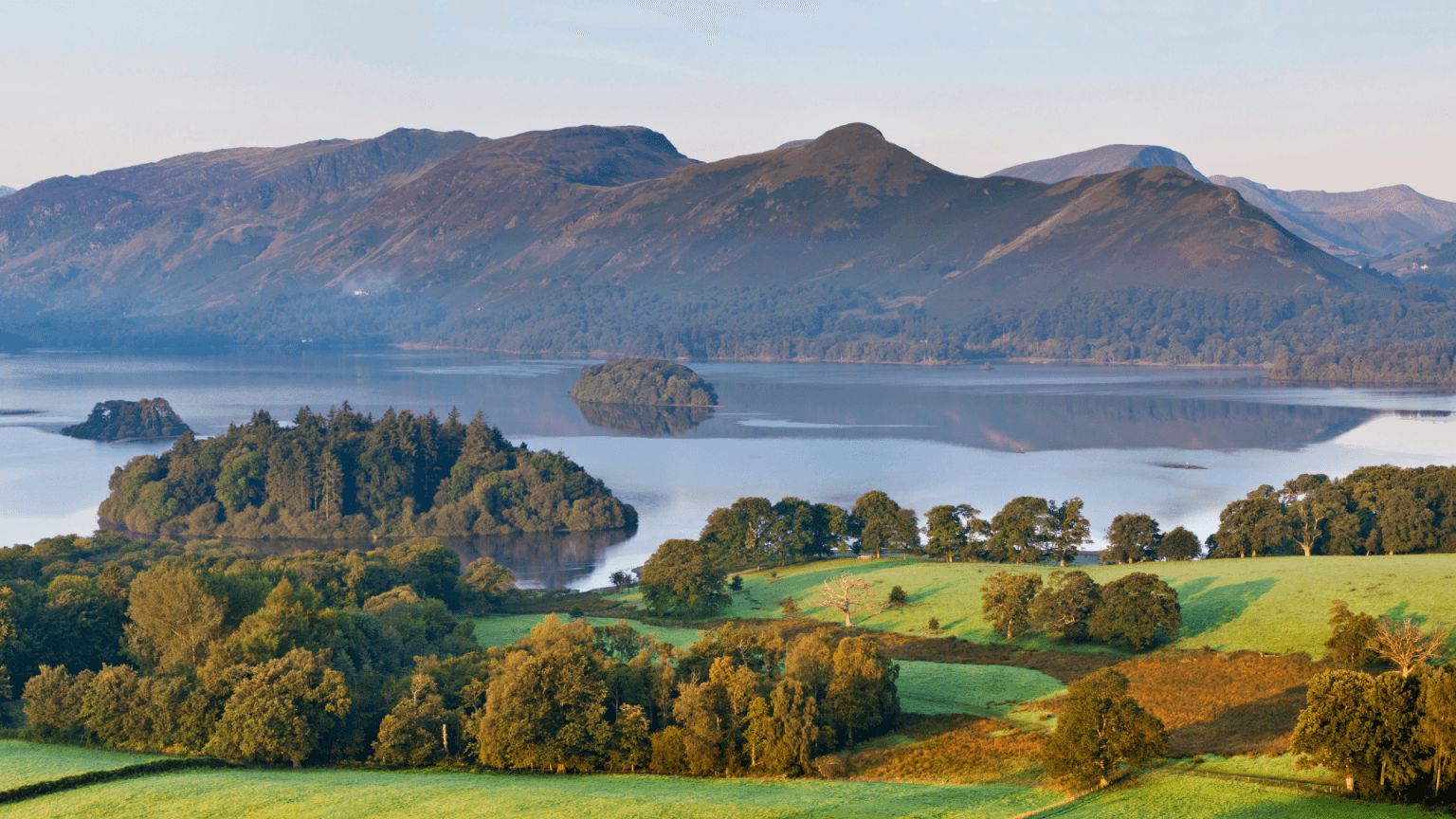


Catbells is the fell everyone climbs first, and it deserves its reputation. It's only 451 metres high, but it rises straight out of Derwentwater, the path up the ridge is short and steep with a bit of easy scrambling near the top, and the view from the summit takes in Keswick, Skiddaw, Borrowdale and the whole of the Newlands valley.
I've walked it, and it's a walk I'd recommend to anyone starting out on the fells, or anyone who wants a big view without a big day. This is the classic circular route from Hawes End, over the summit and back along the lakeshore.
- Distance
- 5.5 km circular
- Estimated time
- 2.5–3 hrs
- Elevation gain
- 380 m
- Difficulty
- Moderate
Catbells at a glance
- Height: 451 m (1,480 ft), a Wainwright in Book Six, The North Western Fells
- Start: Hawes End, on the west shore of Derwentwater
- Grid reference (summit): NY 244 198
- Terrain: a steep, well-worn path up the ridge, two short rocky sections where you'll use your hands, then grassy paths and a lakeshore track
- Good for: families with older children, first fell walks, a half-day with a view
Getting there and parking
Parking is the hardest part of Catbells. There's a small amount of roadside parking near Hawes End and at Gutherscale, and both fill very early on fine weekends. The narrow lane is no place to circle around looking for a space.
The best way to arrive is by boat. The Keswick Launch runs from the lakeside in Keswick to the Hawes End jetty, a few minutes' walk from the start of the ridge, and you can walk back along the shore or catch a boat from another jetty. In summer the 77 bus from Keswick also stops near Catbells.
The route
1. Hawes End to the ridge
From the Hawes End jetty or the road, follow the path up through the bracken onto the north end of the ridge. It zigzags steeply at first, and the views open up almost immediately: Derwentwater below you, Keswick at its head and Skiddaw behind.
On the way up you'll pass a small memorial plaque to Thomas Arthur Leonard, a pioneer of walking holidays and access to the countryside.
2. Skelgill Bank and the scramble
The ridge levels out over Skelgill Bank, then rears up for the final climb. There are two short rocky steps near the top where you'll need your hands. They're easy, but the rock has been polished smooth by thousands of boots and is slippery when wet. Take them slowly, and give a hand to children.
3. The summit
The summit is a small, rocky top at 451 metres. On a clear day you can see along Derwentwater to Borrowdale, across to Skiddaw and Blencathra, and down into the Newlands valley on the other side. It gets crowded, so the grassy ridge just beyond is a better place to stop for lunch.
4. Hause Gate and back along the lake
Carry on south along the ridge to the dip at Hause Gate. Turn left here and drop down the clear path towards the road at Manesty. Cross the road and pick up the path through the woods to the lakeshore, then follow the shore north through Brandelhow back to Hawes End.
How hard is Catbells?
It's short, but it's a proper climb: about 380 metres of ascent, much of it steep. The scrambly sections are brief and easy in the dry. Most children from about seven or eight manage it well with an adult; younger ones may need lifting up the rocky steps. In wind, rain or ice it's a different walk, and the polished rock on the scrambles needs real care.
Make it longer
- Maiden Moor and High Spy: carry on south from Hause Gate along the ridge for a bigger day with fewer people.
- The Newlands Horseshoe: a full day linking Catbells with Maiden Moor, High Spy, Dale Head, Hindscarth and Robinson.
What I'd take
Catbells is low, but the weather changes quickly and the summit is exposed. Check the MWIS Lake District forecast before you go.
- Footwear with grip: the polished rock near the top is the main hazard. Walking shoes are fine in the dry; boots are better in the wet.
- A waterproof: even on a fine morning. A budget option like the Berghaus Stormcloud is plenty for a short fell like this.
- A warm layer for the summit, where it's always windier than the lakeshore.
- A small daypack for water, snacks and the layers: something like the Berghaus Arrow 30.